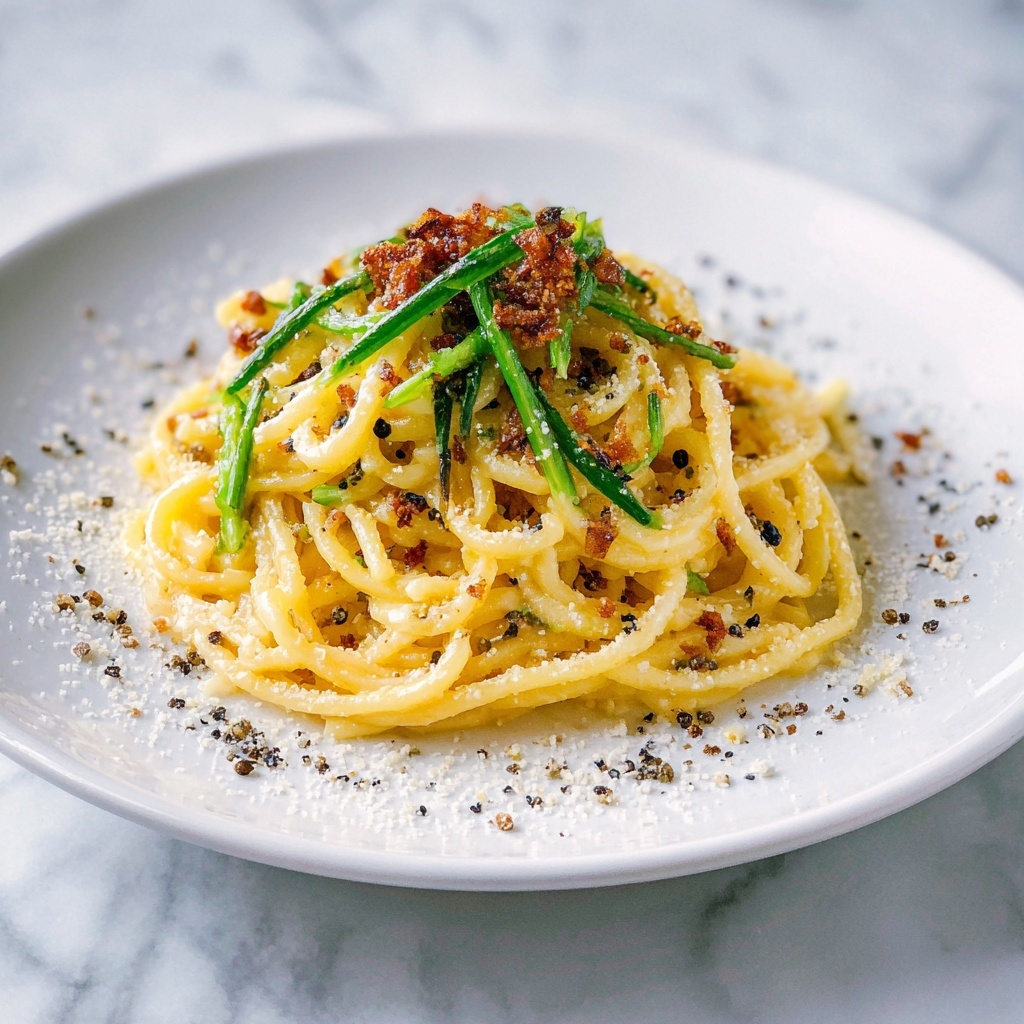
If you’re craving a luscious, comforting pasta dish without meat, this Vegetarian Zucchini Carbonara Recipe is about to become your new favorite indulgence. Combining the silky creaminess of a classic carbonara sauce with crispy, golden zucchini, and the sharp, tangy bite of Pecorino Romano, this dish hits all the right notes. It’s bright, fresh, and utterly satisfying—a perfect meal for any day you want something special yet simple to prepare.
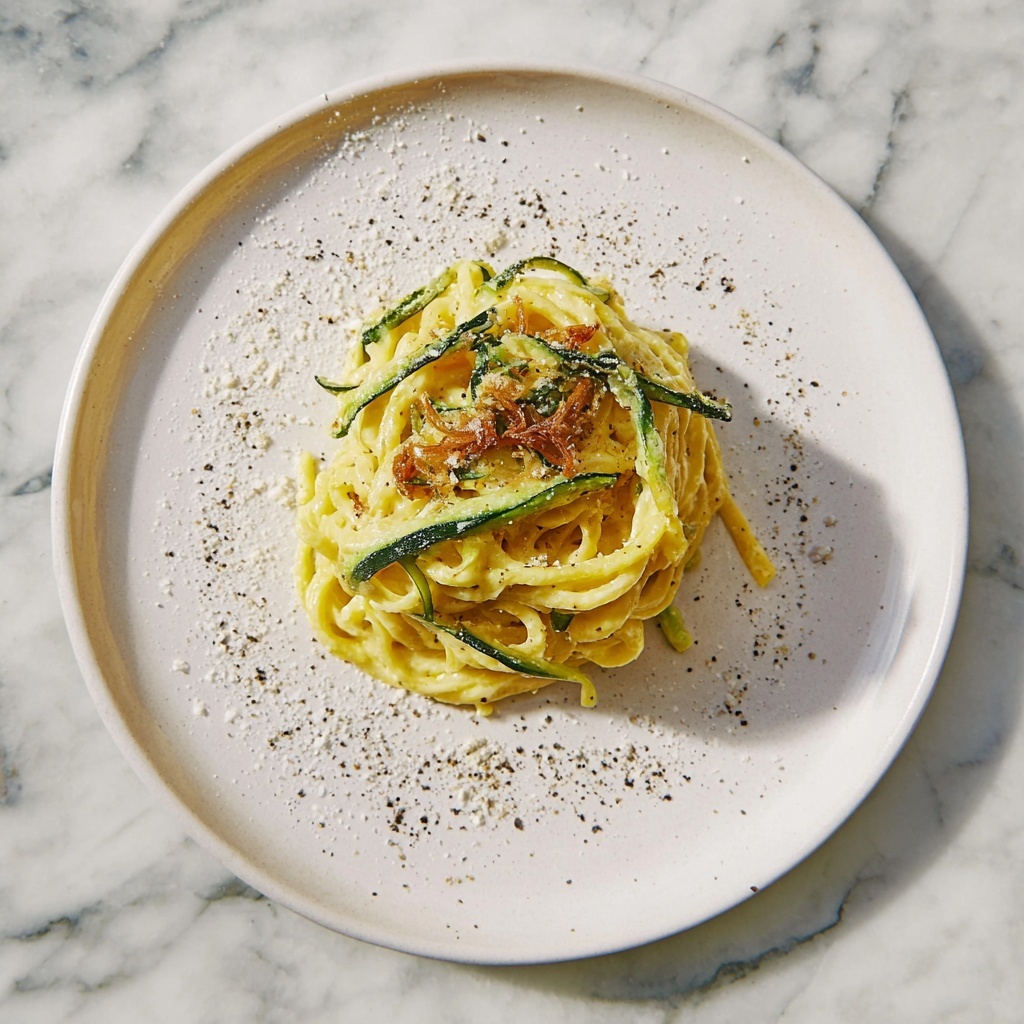
Ingredients You’ll Need
To make a memorable Vegetarian Zucchini Carbonara Recipe, you only need a handful of humble ingredients that punch way above their weight. Each element plays a key role in building the dish’s vibrant flavor, texture, and color, proving that simplicity can be truly spectacular.
- Large zucchini (1): Delivers tender, slightly crispy layers that mimic the traditional pancetta texture in carbonara.
- Dry pasta (200 grams): Choose your favorite shape; I used fileja Calabresi for authentic texture and bite.
- Eggs (3 total; 2 yolks + 1 whole): The foundation of the creamy, velvety carbonara sauce.
- Pecorino Romano cheese (5 tbsp, plus extra): Adds tanginess and richness with its sharp, salty profile.
- Garlic (2 cloves): Infuses a gentle aromatic warmth to elevate the zucchini.
- Sunflower oil: For frying zucchini until perfectly crisp without overpowering flavors.
- Extra virgin olive oil: Provides a fragrant finishing touch and helps mellow the garlic’s pungency.
- Salt and pepper: Essentials that bring all the flavors into perfect harmony.
How to Make Vegetarian Zucchini Carbonara Recipe
Step 1: Prepare the Zucchini
Start by slicing your zucchini into very thin, even disks. Stack these disks and slice them lengthwise into thin strips, aiming for a consistency that will fry up crisp and golden. This careful preparation sets the stage for a delightful texture contrast in your carbonara.
Step 2: Fry the Zucchini
Heat sunflower oil in a pan until it’s hot but not smoking. Fry the zucchini strips in batches, letting them turn a beautiful crispy brown. When ready, rest them on paper towels to drain excess oil and preserve their crunch without becoming soggy.
Step 3: Boil the Pasta
Bring a large pot of salted water to a rolling boil, adding about a tablespoon of rock salt for seasoning. Drop in your pasta and cook according to package directions until perfectly al dente. Reserve about one mug of pasta water before draining—this starchy liquid will help you create a velvety sauce later.
Step 4: Make the Carbonara Sauce
In a bowl, whisk together two egg yolks and one whole egg. Add freshly ground pepper generously to season and give the sauce some personality. Gradually incorporate the Pecorino Romano a little at a time—this forms the creamy base, so watch its thickness carefully to keep it smooth and luscious.
Step 5: Prepare the Garlic Oil
Finely slice your garlic cloves, then smash or mince them even further. Warm extra virgin olive oil gently in a frying pan on low heat, letting the garlic infuse its aroma into the oil for about 30 seconds. This subtle, fragrant oil is the flavor backbone for your zucchini and pasta.
Step 6: Combine Ingredients
Toss the fried zucchini into the garlic-infused oil briefly to heat through, then remove and place on fresh paper towels again. Add cooked pasta to the pan, mixing with about half a mug of the reserved pasta water, allowing the pasta to soak up that silky liquid. Remove the pan from heat, sprinkle some Pecorino, then blend thoroughly.
Step 7: Finish the Sauce and Plate
Off the heat, pour the egg and cheese mixture into the warm pasta, stirring quickly to create a creamy, rich sauce without scrambling the eggs. Add the remaining zucchini and Pecorino. Give everything a final gentle mix—then it’s ready to serve! Carefully plate this golden, creamy magic, topping with extra Pecorino and freshly cracked pepper.
How to Serve Vegetarian Zucchini Carbonara Recipe
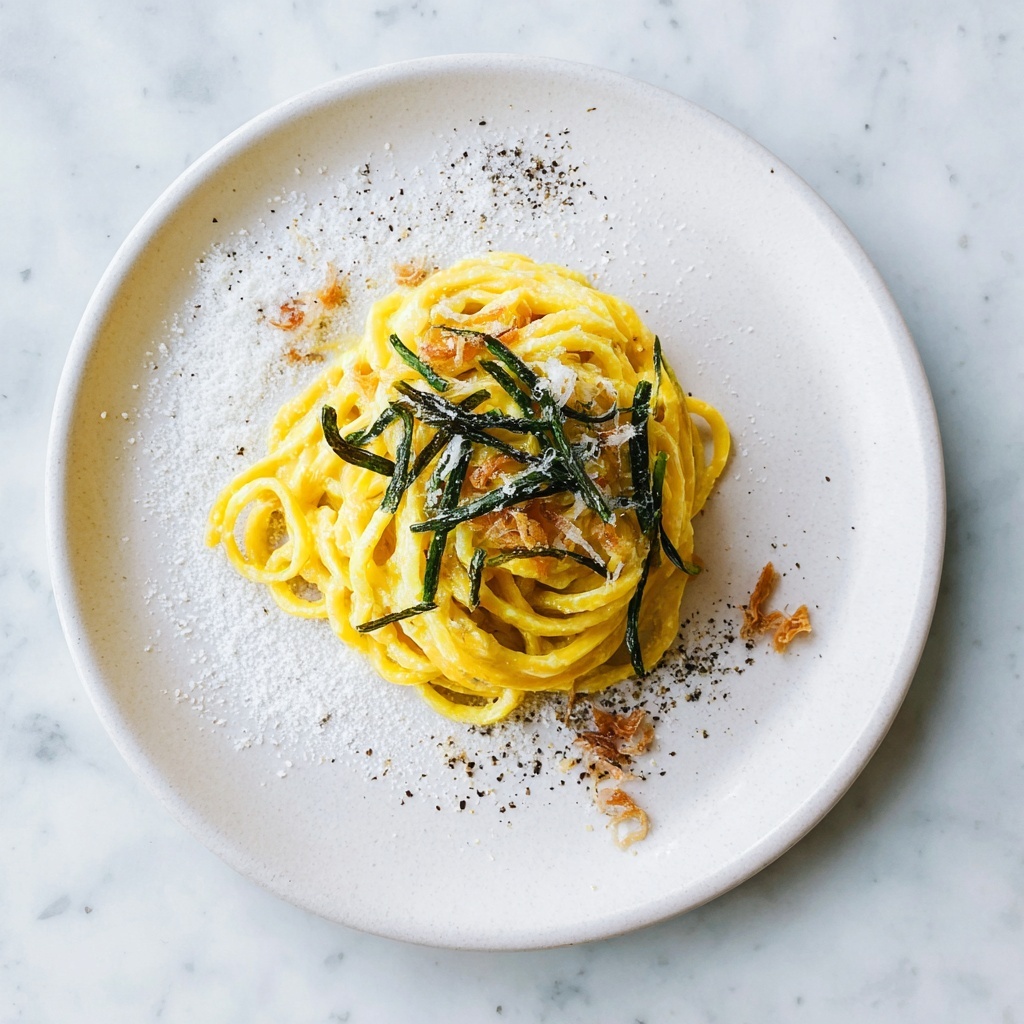
Garnishes
A sprinkle of freshly grated Pecorino Romano and a generous crack of black pepper add a bright and sharp finish, enhancing each bite with extra depth. Some fresh basil or a tiny drizzle of good-quality extra virgin olive oil can also lift the flavors beautifully.
Side Dishes
This Vegetarian Zucchini Carbonara Recipe pairs delightfully with simple sides like a crisp green salad dressed with lemon vinaigrette or garlic-roasted cherry tomatoes. These fresh elements complement the creamy pasta perfectly by adding contrast and balance to your meal.
Creative Ways to Present
For a fun twist, serve the carbonara in warm shallow bowls with zucchini ribbons artfully twirled around the pasta. Alternatively, crusty garlic bread on the side invites those delicious sauce mops, making your meal feel both cozy and special.
Make Ahead and Storage
Storing Leftovers
If you have leftovers, store them in an airtight container in the refrigerator for up to two days. The pasta will absorb the sauce over time, so stirring in a splash of water or olive oil before reheating helps restore that creamy texture.
Freezing
While freezing carbonara isn’t usually recommended because of the egg-based sauce, you can freeze the cooked zucchini and pasta separately. Combine and reheat gently once thawed to maintain the best possible texture and flavor.
Reheating
Reheat leftovers gently on the stovetop over low heat, adding a bit of reserved pasta water or olive oil to loosen the sauce and prevent the eggs from scrambling. Microwave reheating can work too but do it in short bursts and stir frequently for best results.
FAQs
Can I use another type of cheese instead of Pecorino Romano?
Absolutely! Parmesan is a great substitute that’s milder but still adds umami richness to your Vegetarian Zucchini Carbonara Recipe. Just keep in mind Pecorino’s sharper tang is part of what makes this dish so distinct.
Can I make this recipe vegan?
This recipe relies heavily on eggs and cheese for the signature creaminess, so a vegan version would require alternative ingredients like silken tofu or cashew cream, which would change the taste and texture significantly.
What pasta shapes work best?
Traditional carbonara uses long strands like spaghetti, but short, textured pastas like fileja or rigatoni hold the sauce beautifully and add a pleasing bite. Feel free to experiment with what you enjoy most!
How do I avoid scrambling the eggs when mixing the sauce?
The key is to remove the pan from heat before adding the egg mixture and to stir rapidly while combining. The residual heat cooks the eggs gently, turning them into a silky sauce rather than scrambled bits.
Can I add other vegetables to this carbonara?
Of course! Mushrooms, peas, or asparagus can be great additions, sautéed separately and folded in at the end. Just keep in mind this will alter the classic flavor profile slightly.
Final Thoughts
If you want a dish that’s bursting with flavor, effortless to make, and thoroughly satisfying, you’ve got to try this Vegetarian Zucchini Carbonara Recipe. It’s a vibrant, comforting embrace on a plate that can brighten any weeknight or impress guests with elegant simplicity. Go ahead and give it a whirl—you won’t regret it!
Print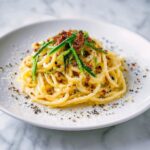
Vegetarian Zucchini Carbonara Recipe
- Prep Time: 10 minutes
- Cook Time: 20 minutes
- Total Time: 30 minutes
- Yield: 2 servings
- Category: Main Course
- Method: Frying
- Cuisine: Italian
- Diet: Vegetarian
Description
This Vegetarian Carbonara recipe offers a delicious twist on the classic Italian dish by replacing pancetta with crispy fried zucchini. Combining perfectly cooked pasta with a creamy sauce made from eggs and pecorino romano cheese, this dish is rich, flavorful, and easy to make in just 30 minutes. Garlic and olive oil add depth, while the zucchini brings a satisfying texture and freshness, making this a perfect meat-free option for pasta lovers.
Ingredients
Vegetables
- 1 Large zucchini (or two medium)
- 2 cloves Garlic (1 per person)
Dry Goods
- 200 grams dry pasta (7.05 oz; fileja Calabresi recommended)
- 5 tbsp Pecorino Romano cheese (up to 6 heaped tbsp; plus extra for serving)
Proteins
- 3 Eggs (2 egg yolks, 1 whole egg)
Oils & Seasonings
- Sunflower oil (for frying zucchini)
- Extra virgin olive oil (as required)
- Salt (to taste, 1 tbsp rock salt for pasta water)
- Black pepper (to taste)
Instructions
- Prepare the Zucchini: Cut the zucchini into thin disks, stack them, then slice into thin strips to create uniform pieces for frying.
- Fry the Zucchini: Heat sunflower oil until hot, then fry the zucchini strips until they turn crispy brown. Remove and drain on a paper towel-lined plate to absorb excess oil.
- Boil the Pasta Water: Bring a large pot of water to a rolling boil and add 1 tablespoon of rock salt to season the water properly.
- Cook the Pasta: Add the dry pasta to the boiling water and cook according to the package instructions until al dente. Reserve about 1 mug (250ml) of pasta water before draining the pasta.
- Prepare the Egg Mixture: In a bowl, whisk together 2 egg yolks and 1 whole egg. Add a generous amount of freshly ground black pepper and gradually mix in pecorino cheese little by little to form a thick but still runny cream.
- Prepare the Garlic Oil: Thinly slice and finely smash the garlic cloves. Heat 2 tablespoons of extra virgin olive oil in a frying pan over low heat and add the garlic, allowing the aroma to infuse the oil for about 30 seconds.
- Reheat the Zucchini: Add the fried zucchini to the garlic oil for a brief warm-up, then remove them onto a paper towel-lined plate to keep crisp.
- Combine Pasta and Sauce: Return the pasta to the frying pan. Add about half a mug of the reserved pasta water and stir well to help coat the pasta and loosen the sauce.
- Mix Pecorino Cheese: Remove the pan from heat and add some pecorino cheese, stirring to combine with the pasta and create a creamy texture.
- Add Egg Mixture: Gradually add the egg and cheese mixture to the pasta off the heat. The residual heat will gently cook the eggs while the pasta water helps create a smooth, creamy carbonara sauce.
- Finish the Dish: Sprinkle additional pecorino and the reserved crispy zucchini into the pan, mixing everything together to incorporate flavors and textures.
- Serve: Plate the carbonara by scooping it onto the center of plates and garnish with extra pepper, pecorino cheese, and zucchini strips for added flavor and presentation.
Notes
- Use a sturdy pasta shape like fileja or similar to hold the sauce well.
- Reserve enough pasta water to adjust sauce consistency as needed.
- Be careful not to scramble the eggs; always add the egg mixture off the heat and stir quickly.
- Sunflower oil works well for frying due to its neutral flavor and high smoke point.
- For a richer taste, use authentic Pecorino Romano.