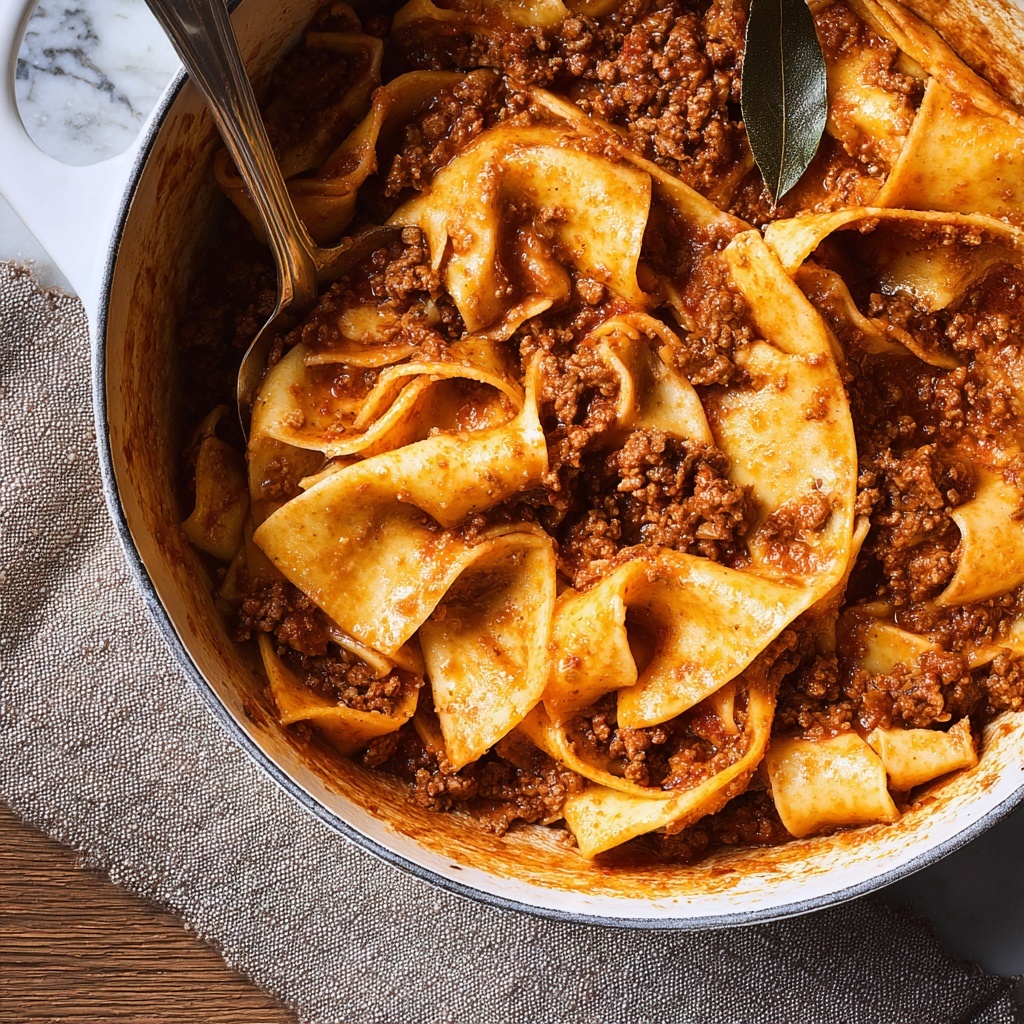
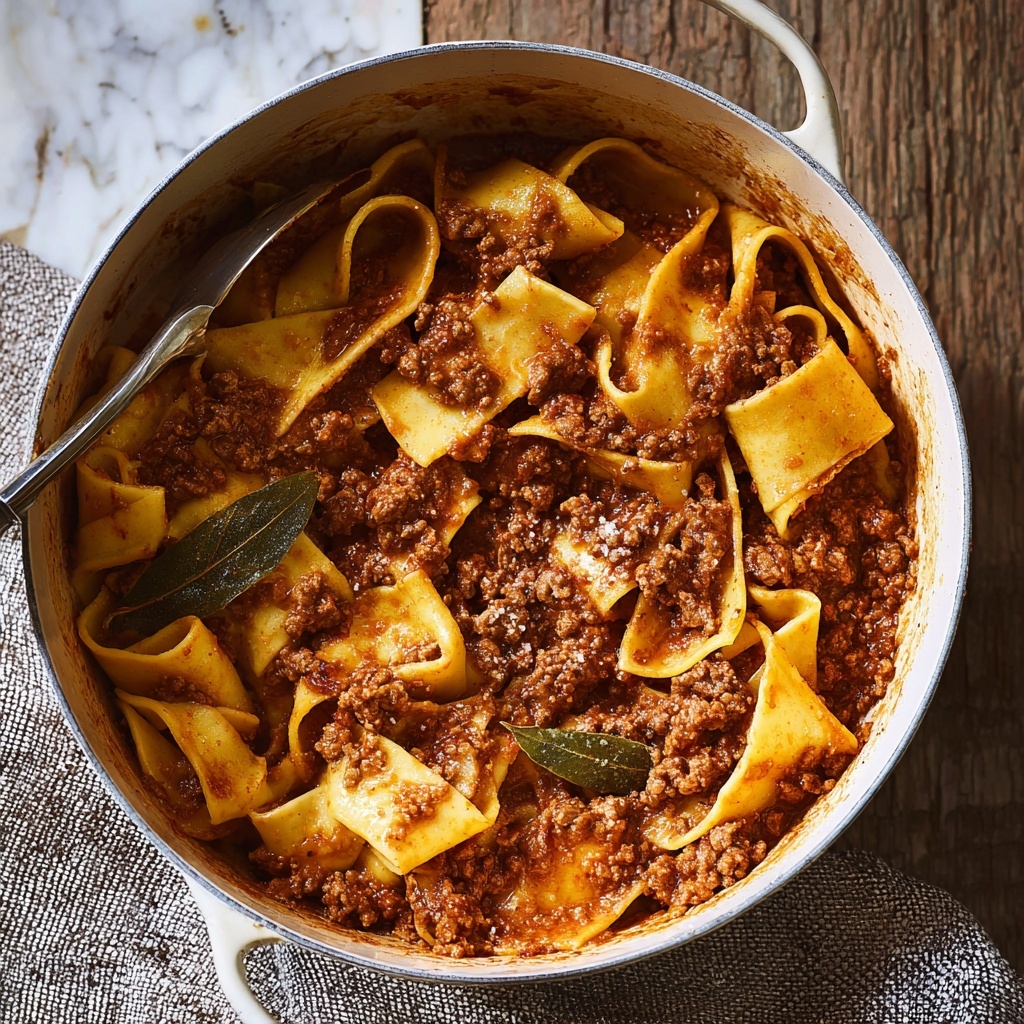
If you have ever dreamed of capturing the soul of traditional Italian cooking in one soul-warming dish, the Ragù Bolognese Sauce with Pappardelle Recipe delivers exactly that. This hearty Ragù Bolognese sauce simmers slowly, melding rich ground meats, creamy milk, vibrant tomato paste, and a bouquet of fresh aromatics into a luxurious sauce that clings perfectly to broad, silky pappardelle noodles. Every bite is a celebration of comfort and culinary tradition, making it a dish you’ll want to share with family and friends again and again.
Ingredients You’ll Need
Though it may seem like a list of simple pantry staples, each ingredient in this Ragù Bolognese Sauce with Pappardelle Recipe plays a vital role in creating that iconic depth of flavor and luscious texture. From the savory pancetta to the fragrant herbs, every item contributes a unique note to the final creation.
- Unsalted butter (2 tbsp.): Adds richness and helps build a silky base for the sauce.
- Olive oil (2 tbsp.): Provides a subtle fruity flavor and assists in sautéing ingredients evenly.
- Diced pancetta (2 oz.): Delivers a savory, slightly smoky undertone important for depth.
- Onion (1): Offers sweetness and aromatic foundation when finely chopped.
- Carrot (1): Gives natural sweetness and balances acidity in the sauce.
- Celery stick (1): Adds earthiness and a gentle crunch before slow cooking.
- Ground beef (1/2 lb., 80% lean): Brings robust meaty flavor and tender texture.
- Ground pork (1/2 lb.): Provides juiciness and subtle fattiness that enriches the sauce.
- Whole milk (1 cup): Softens the acidity and adds creamy body to the ragù.
- Ground nutmeg (pinch): Offers warmth and subtle spiced sweetness enhancing the sauce’s complexity.
- Dried bay leaf (1) or fresh (2): Imparts herbal depth and fragrance as it simmers.
- Dry white wine (1 cup): Adds acidity and layers of flavor that brighten the sauce.
- Tomato paste (heaping 1/4 cup): Concentrated tomato flavor giving richness and vibrant color.
- Quality chicken stock (1–2 cups): Adjusts consistency and adds savory depth to the sauce.
- Canned whole peeled plum tomatoes (optional, 28 oz.): Used if you desire a more pronounced tomato presence.
- Homemade pappardelle pasta (1 lb.): Wide, tender ribbons that hold the luscious Ragù Bolognese sauce beautifully.
- Fresh grated Parmesan cheese: The perfect finishing touch with salty, nutty goodness.
How to Make Ragù Bolognese Sauce with Pappardelle Recipe
Step 1: Start with Flavorful Base
Begin by warming unsalted butter and olive oil in a heavy pot over medium-low heat, allowing the fats to melt and mingle. The goal here is to create a rich, silky platform for your aromatics and meats to build upon.
Step 2: Prepare the Sofrito
Pulse pancetta, onion, carrot, and celery just until finely chopped but not pureed — keeping some texture is key. This classic soffritto forms the flavor backbone of your sauce, gently releasing sweetness and savoriness as it slowly sautés to a light golden color over 10 to 15 minutes.
Step 3: Add the Ground Meats
Next, add the ground beef and pork, breaking it up with a fork so it blends smoothly without browning. Season with salt and pepper. Cooking just until the pink disappears maintains a soft texture that will later melt into the ragù’s velvety consistency.
Step 4: Creamy Milk and Spices
Pour in the whole milk along with a pinch of nutmeg and your bay leaf. This step is crucial because it tenderizes the meat and balances acidity. Simmer gently until the milk almost evaporates, which can take about 20 minutes or longer.
Step 5: Wine and Tomato Paste Magic
Add the white wine and let it reduce until nearly gone, intensifying the sauce’s flavor. Stir in the tomato paste thoroughly to distribute its concentrated sweetness, and then add the chicken stock along with optional canned tomatoes if you prefer a more tomato-forward sauce.
Step 6: The Long, Slow Simmer
Reduce heat to low and let the sauce simmer gently with the lid slightly ajar for 1 to 2 hours. Patience here is everything; this slow cooking melts the flavors together, develops a luscious texture, and creates that soulful Ragù Bolognese Sauce with Pappardelle Recipe magic you crave. Keep an eye on moisture levels, adding stock or tomatoes as needed, and skim excess fat off the top.
Step 7: Cook the Pappardelle
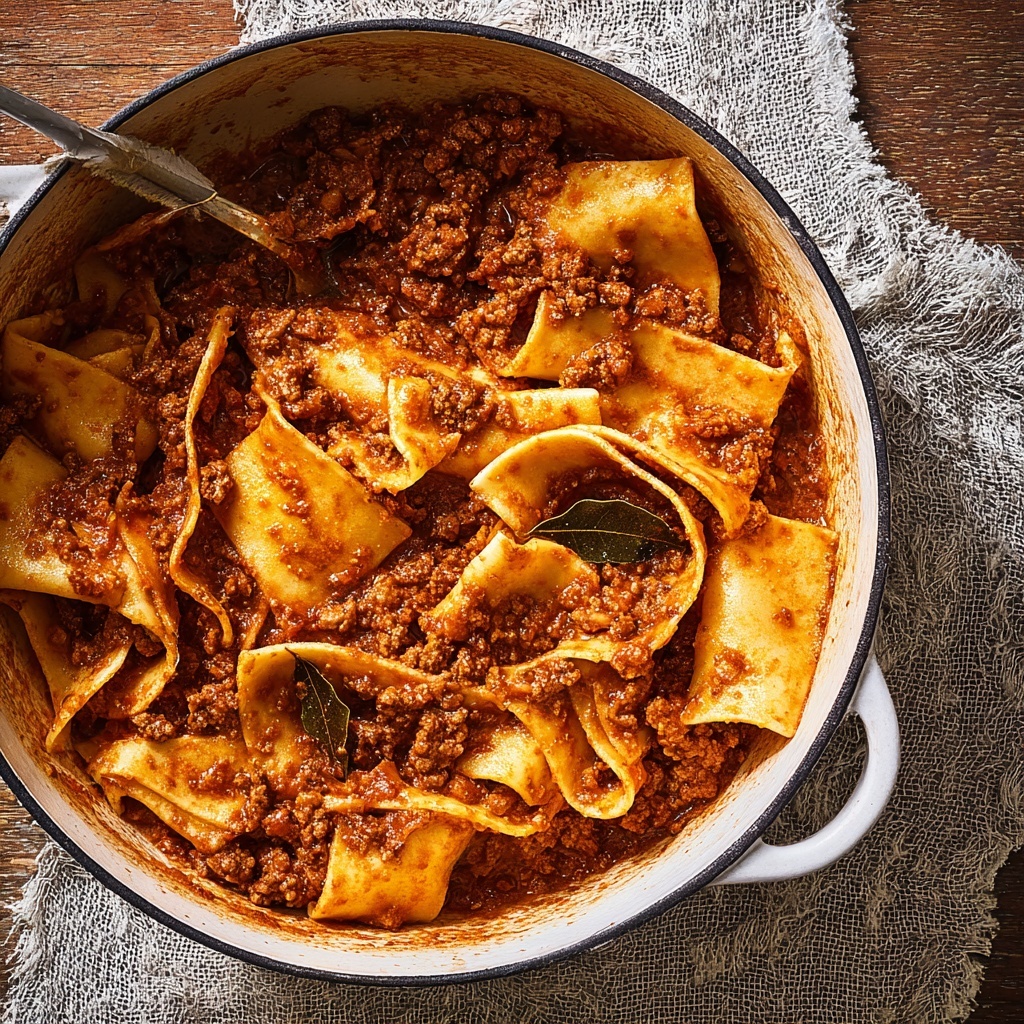
Just before serving, boil salted water and cook your pappardelle noodles until tender yet firm to the bite. Using tongs, transfer the pasta directly into the sauce and toss gently with an extra pat of butter for silkiness. The wide ribbons are perfect for holding the hearty ragù.
How to Serve Ragù Bolognese Sauce with Pappardelle Recipe
Garnishes
A generous sprinkle of freshly grated Parmesan cheese is a must; it adds a salty, nutty finish that brightens the dish. For extra flair, a few torn fresh basil leaves or a drizzle of good olive oil can elevate presentation and aroma.
Side Dishes
Serve alongside a crisp green salad dressed lightly with lemon and olive oil to cut through the richness. Crusty Italian bread or garlic bread also make excellent companions for mopping up every last bit of that sumptuous ragù.
Creative Ways to Present
For a special occasion, serve the Ragù Bolognese Sauce with Pappardelle Recipe in rustic ceramic bowls to highlight its homey charm. Garnish with microgreens or a pinch of freshly cracked black pepper to add a visual pop and subtle spice. Pairing with a robust red wine enhances the meal’s depth and celebration feel.
Make Ahead and Storage
Storing Leftovers
Allow the Ragù Bolognese sauce to cool completely before transferring it to an airtight container. It keeps beautifully in the refrigerator for up to four days, during which the flavors continue to intensify and deepen, making every reheated bite even more delicious.
Freezing
This sauce freezes very well, making it convenient for busy weeknights. Portion it into freezer-safe containers, leaving space for expansion, and freeze for up to three months. Thaw overnight in the fridge before reheating gently on the stove.
Reheating
Reheat the sauce slowly over low heat, stirring occasionally and adding a splash of stock or water if it seems too thick. This will help restore the sauce’s luscious texture and keep the meat tender and juicy.
FAQs
Can I use store-bought pasta instead of homemade pappardelle?
Absolutely! While homemade pappardelle adds a special fresh texture, good quality store-bought pappardelle works wonderfully and can save time without sacrificing flavor.
Is it necessary to use both ground beef and pork?
Using both meats creates a balance of flavor and fat that enriches the sauce. However, you can use just one type if needed; just keep in mind the texture and taste might be slightly different.
Can I make the Ragù Bolognese Sauce with Pappardelle Recipe in a slow cooker?
You can, but slow cookers don’t always allow for the necessary evaporation steps, so adjustments are needed. It’s best to brown and reduce liquids on the stove, then transfer to a slow cooker for the long simmer.
What can I substitute for pancetta if I don’t have it?
Bacon or finely chopped prosciutto can be good substitutes to provide that savory, slightly smoky flavor pancetta contributes.
How important is the long simmering time?
It is key to developing the character and mouthfeel of a true Ragù Bolognese. Rushing this step will result in a less tender sauce with underdeveloped flavors.
Final Thoughts
If you’re ready to dive into a dish that feels like a warm hug from Italy itself, the Ragù Bolognese Sauce with Pappardelle Recipe is waiting to become your go-to comfort dinner. With its perfect balance of rich, meaty sauce and tender ribbons of pasta, you can savor the rewards of slow cooking and authentic ingredients in every delightful bite. I promise, once you make this, you’ll keep coming back for more!
Print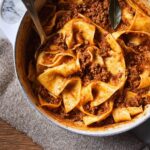
Ragù Bolognese Sauce with Pappardelle Recipe
- Prep Time: 30 minutes
- Cook Time: 3 hours 10 minutes
- Total Time: 3 hours 40 minutes
- Yield: 5 servings
- Category: Main Course
- Method: Stovetop
- Cuisine: Italian
Description
A classic Italian Ragù Bolognese sauce simmered slowly to develop rich flavors, made with a blend of ground beef and pork, aromatic vegetables, milk, white wine, and tomato paste. Served traditionally with fresh homemade pappardelle pasta and topped with freshly grated Parmesan cheese, this hearty sauce offers a melt-in-your-mouth texture that elevates any pasta dish.
Ingredients
For the Ragù Bolognese Sauce
- 2 tbsp. (30 g) unsalted butter
- 2 tbsp. (30 ml) olive oil
- 2 oz. (60 g) diced pancetta
- 1 onion, finely chopped
- 1 carrot, finely chopped
- 1 celery stick, finely chopped
- 1/2 lb. (250 g) ground beef, about 80% lean
- 1/2 lb. (250 g) ground pork
- 1 cup (236 ml) whole milk
- Pinch of ground nutmeg
- 1 dried bay leaf or 2 fresh bay leaves
- 1 cup (236 ml) dry white wine
- Heaping 1/4 cup (60–70 g) tomato paste
- 1–2 cups (236–472 ml) quality chicken stock
- (Optional) 28 oz (800 g) can whole peeled plum tomatoes in purée, passed through food mill
For the Pasta and Serving
- 1 lb. homemade pappardelle pasta
- Fresh grated Parmesan cheese, to serve
- Additional butter, for finishing pasta
Instructions
- Prepare the base: In a heavy bottom pot or Dutch oven, warm the butter and olive oil over medium-low heat to create a flavorful fat base for your sauce.
- Process vegetables and pancetta: Pulse pancetta, onion, carrot, and celery in a food processor until finely chopped without over-processing; this mixture can also be chopped finely by hand.
- Sauté the mixture: Add the chopped pancetta and vegetables to the pot and sauté, stirring occasionally for 10-15 minutes until lightly golden, adding more butter or oil if it dries out.
- Add the meats: Incorporate ground beef and pork, breaking them up with a fork. Season with salt and black pepper. Cook just until the meat changes from pink but do not brown it to keep the texture tender.
- Add dairy and seasonings: Pour in the milk, add a pinch of nutmeg and the bay leaf, and simmer gently until the milk is almost fully evaporated, which could take up to 20 minutes or longer depending on your pot size.
- Incorporate wine and tomato paste: Pour in the white wine and simmer until nearly evaporated. Stir in the tomato paste until fully dissolved. Add 1 cup of chicken stock along with the milled plum tomatoes if using, and stir well to combine all flavors.
- Simmer the sauce slowly: Reduce heat to low and cook the sauce with the lid slightly ajar for 1-2 hours. The sauce should barely bubble to allow flavors to meld and the texture to become rich and thick. Add more stock or tomatoes as needed to maintain a thick but not dry consistency. Skim off excess fat and adjust salt towards the end.
- Cook the pasta: While the sauce finishes, bring a large pot of salted water to a boil. Cook the fresh pappardelle noodles for 3-7 minutes until tender yet al dente, stirring occasionally to prevent sticking.
- Combine and serve: Drain pasta using tongs and transfer directly into the sauce pot. Add a pat of butter to enhance richness. Serve immediately topped with freshly grated Parmesan cheese for a classic Italian finish.
Notes
- If you don’t have tomato paste, omit chicken stock and instead use canned tomatoes. Start with a 14 oz (400 g) can of whole peeled plum tomatoes, chopped before adding to the sauce, and adjust quantity as desired.
- Preferred canned tomato brands include San Marzano, Bianco DiNapoli, Cento, and Jovial for authentic flavor.
- Cooking times may vary depending on the size of your pot; smaller pots may require longer cooking to achieve proper reduction.
- If doubling the recipe, increase simmering and cooking times to ensure full flavor development.
- Slow, low-temperature cooking is key to developing the sauce’s rich, melt-in-your-mouth texture.