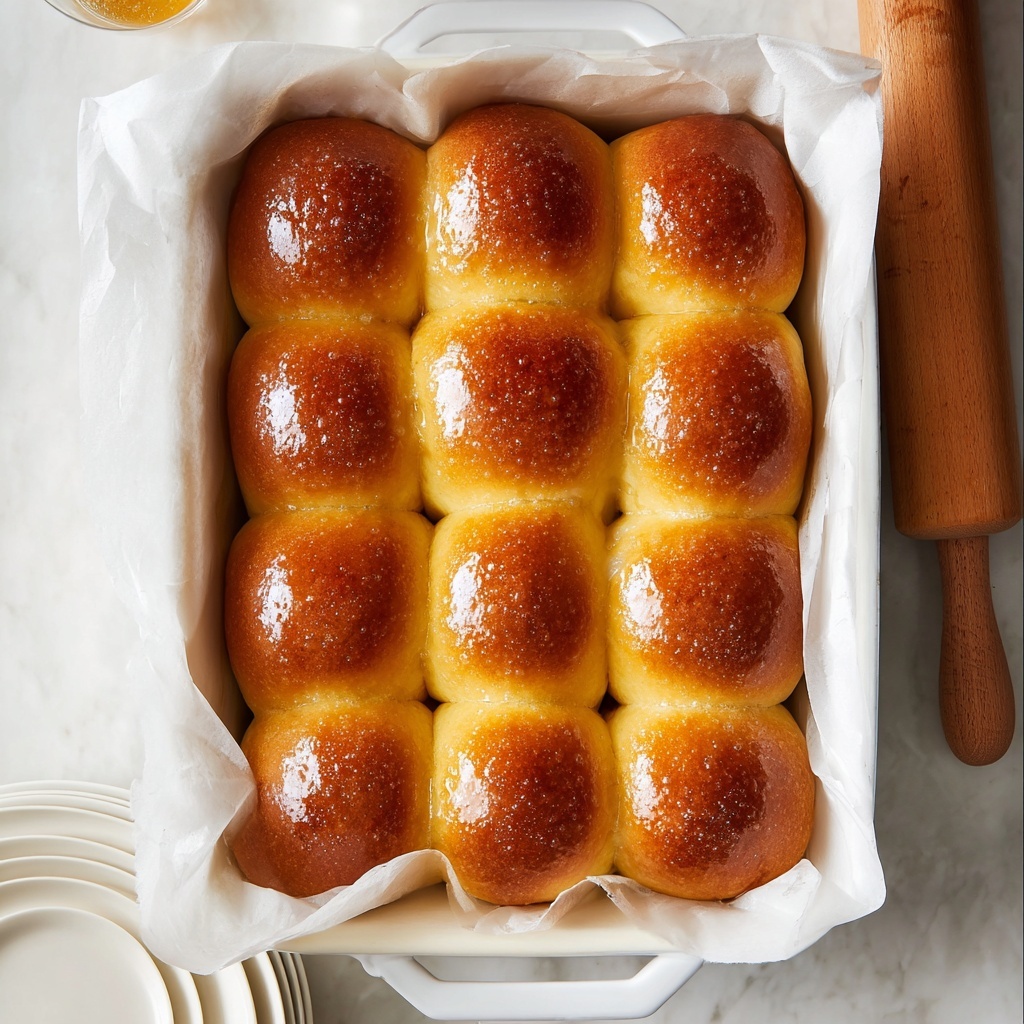
If there is one comforting, universally loved bread to have at any meal, it has to be these soft, golden, melt-in-your-mouth dinner rolls. This Dinner Rolls Recipe brings classic, fluffy rolls right to your kitchen table with basic, wholesome ingredients working in harmony to create that perfect light crumb and tender texture. Whether you’re slathering them with butter or pairing alongside a hearty stew, these rolls will quickly become your go-to for any occasion that calls for a warm, inviting bread.
Ingredients You’ll Need
With few but essential ingredients, this recipe proves that simplicity is the secret to that irresistibly soft and flavorful roll. Each one plays a key role in building a dough that’s soft, rises beautifully, and bakes to a golden, tender finish.
- Warm milk (1 cup, about 110°F): Activates the yeast gently and adds richness for a tender crumb.
- Active dry yeast (2 1/4 teaspoons): The magical leavening agent responsible for those fluffy, airy rolls.
- Granulated sugar (2 tablespoons): Feeds the yeast and adds a touch of sweetness that balances the bread’s flavor.
- Unsalted butter (1/4 cup melted plus 2 tablespoons for brushing): Provides a tender texture and a buttery shine when brushed on hot rolls.
- Large egg (1): Adds structure and richness to the dough.
- All-purpose flour (3 to 3 1/2 cups): Forms the body of the dough; adding just enough ensures a soft, pliable texture.
- Salt (1 teaspoon): Enhances the flavor of the rolls and balances the sweetness.
How to Make Dinner Rolls Recipe
Step 1: Activate the yeast and mix wet ingredients
Start by combining the warm milk, yeast, and sugar in a large bowl. The warmth wakes the yeast up, and in 5 to 10 minutes you’ll see a foamy, bubbly surface. This tells you the yeast is alive and ready to give the rolls their lift. Stir in the melted butter and egg until everything is well combined, creating a rich and fragrant base for the dough.
Step 2: Incorporate flour and salt to form the dough
Add 3 cups of the flour and the salt to the wet mixture, then mix with a wooden spoon or dough hook until a soft dough forms. If the dough feels too sticky to work with, gently knead in more flour, a tablespoon at a time. You want a dough that pulls away from the sides but remains slightly tacky to the touch—this ensures the rolls will be tender and not dry.
Step 3: Knead until smooth and elastic
On a lightly floured surface, knead the dough for about 6 to 8 minutes by hand, or 4 to 5 minutes if using a stand mixer with a dough hook. This kneading develops gluten, giving the rolls their perfect chew and smooth texture. When the dough is silky and springs back gently when poked, it’s ready to rest.
Step 4: First rise in a warm spot
Transfer the dough to a greased bowl and cover it with a clean towel or plastic wrap. Let it rise in a warm place for about 1 to 1 1/2 hours, until it has doubled in size. This slow proofing is key to achieving that airy, light crumb inside each roll.
Step 5: Shape and second rise
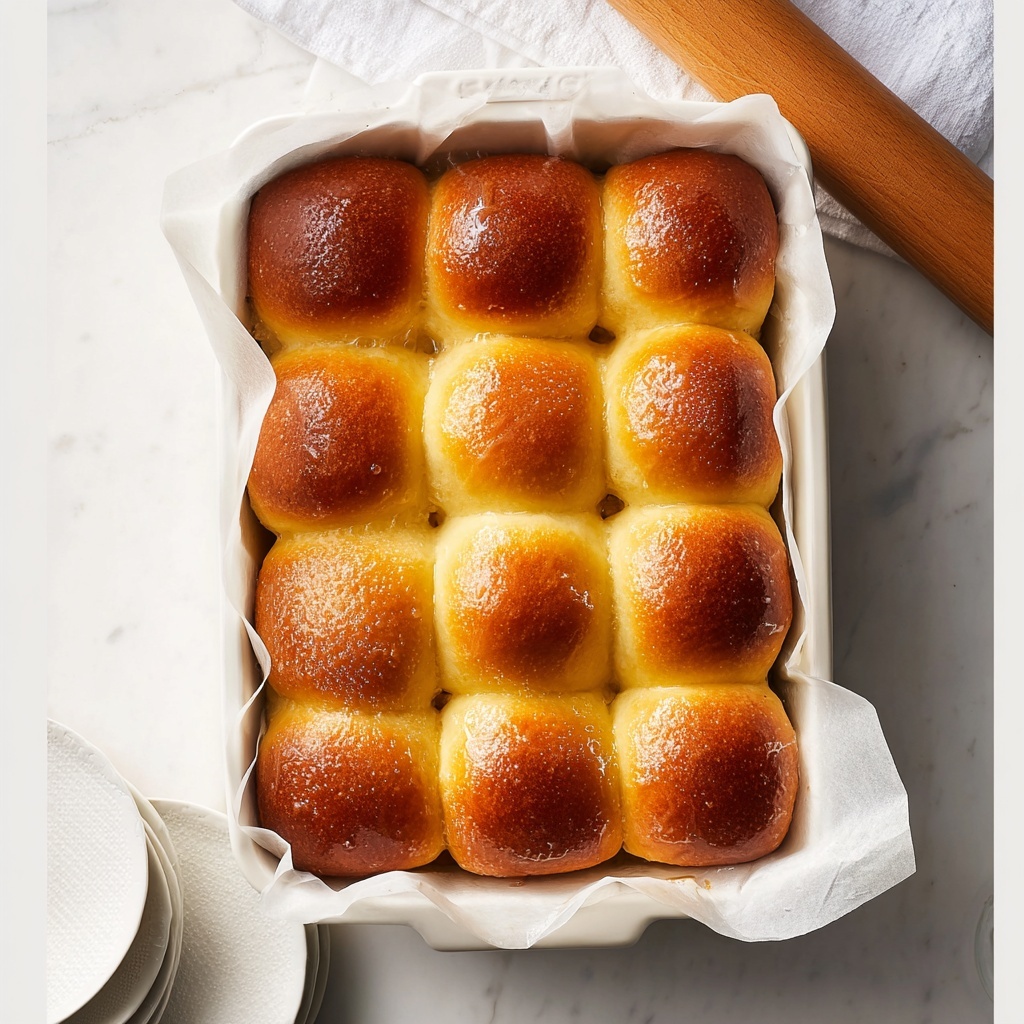
Punch down the dough gently to release the air. Divide it evenly into 12 portions, rolling each piece into a smooth ball. Place these in a greased 9×13 baking dish or on a parchment-lined sheet. Cover again and let the rolls rise for another 30 to 45 minutes until they’re puffed and ready to bake.
Step 6: Bake and brush with butter
Preheat your oven to 375°F (190°C) and bake the rolls for 15 to 18 minutes, watching closely for a gorgeous golden top. Right after taking them out, brush them generously with melted butter to achieve a tender, shiny finish. Serve warm and watch everyone fall in love bite by bite.
How to Serve Dinner Rolls Recipe
Garnishes
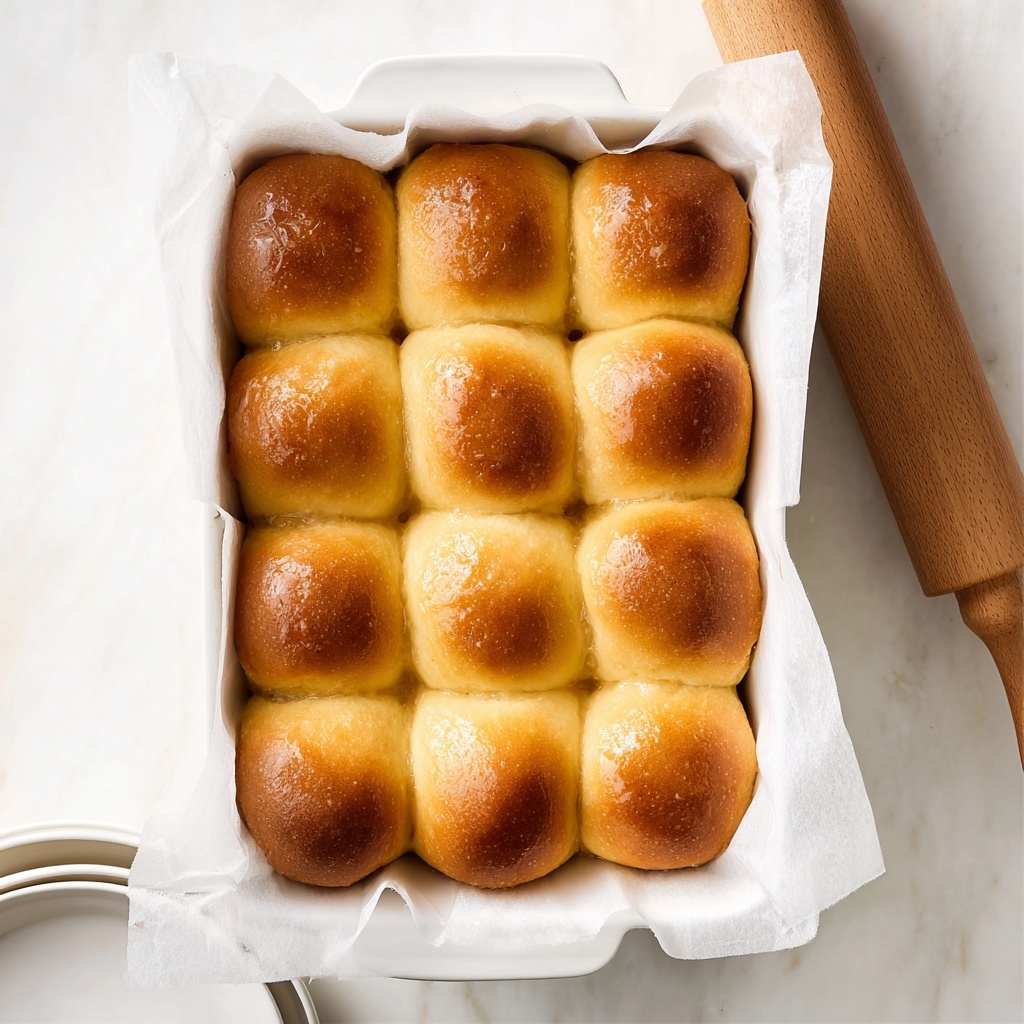
Brushing the warm rolls with extra melted butter right out of the oven is a classic that never disappoints. For a twist, sprinkle some fresh herbs like rosemary or thyme on top of the butter for a fragrant, savory touch that elevates the experience.
Side Dishes
These rolls are endlessly versatile — perfect partners for soups like creamy tomato bisque, robust stews, or even alongside a festive roast dinner. Their soft texture and mild flavor make them a delicious canvas for whatever main course you’re serving.
Creative Ways to Present
Try stacking the rolls in a warm basket lined with a cozy cloth for a rustic feel at any family gathering. Or serve them as mini sliders by slicing each roll horizontally and stuffing with flavorful fillings like chicken salad or honey-glazed ham for a fun party appetizer.
Make Ahead and Storage
Storing Leftovers
If you have any rolls left over (though they rarely last long!), store them in an airtight container or resealable plastic bag at room temperature for up to two days. This helps keep their soft texture intact without drying out.
Freezing
These rolls freeze beautifully when wrapped tightly in plastic wrap and stored in a freezer-safe bag. Freeze them either before baking (right after the second rise) or after baking once cooled. When ready to enjoy, thaw completely before reheating.
Reheating
Reheat frozen or leftover rolls in a warm oven at 300°F for about 10 minutes to refresh that freshly baked softness. You can also microwave briefly with a damp paper towel over the rolls to keep moisture locked in.
FAQs
Can I use whole wheat flour instead of all-purpose flour?
Yes, but it will change the texture slightly. Using whole wheat flour makes the rolls heartier and denser, so you might want to start with part whole wheat and part all-purpose flour to maintain softness.
How do I know when the dough is kneaded enough?
The dough should be smooth, elastic, and slightly tacky but not sticky. If you gently poke it, the dough should bounce back slowly. These are signs your gluten is well developed and ready for rising.
Can I make the dough in a stand mixer?
Absolutely! A stand mixer fitted with a dough hook saves time and effort. Mix and knead on medium speed until the dough is smooth and elastic—usually about 4 to 5 minutes.
What if my dough doesn’t rise?
Check if your yeast was active by seeing if the milk and yeast mixture became foamy within 10 minutes. If not, your yeast might be expired or your milk too hot or cold. Use fresh yeast and precise liquid temperature for best results.
Can I add flavors to the dough?
Definitely! Adding minced garlic, herbs, or cheese to the dough can personalize your Dinner Rolls Recipe. Just remember to keep the dough texture intact and adjust baking if needed.
Final Thoughts
There’s simply something magical about homemade dinner rolls, and this recipe captures that magic perfectly every single time. From the warm, buttery aroma filling your kitchen to the soft, fluffy texture that melts on your tongue, these rolls truly lift any meal. I hope you enjoy making and sharing this Dinner Rolls Recipe as much as I do—it’s a timeless favorite that never goes out of style.
Print
Dinner Rolls Recipe
- Prep Time: 20 minutes
- Cook Time: 18 minutes
- Total Time: 2 hours 15 minutes
- Yield: 12 rolls
- Category: Bread
- Method: Baking
- Cuisine: American
- Diet: Vegetarian
Description
These soft and fluffy Dinner Rolls are the perfect homemade bread for any meal, featuring a tender crumb and golden crust. Made with warm milk, yeast, and a touch of butter, they are simple to prepare and ideal for serving alongside holiday dinners or everyday meals.
Ingredients
Dough
- 1 cup warm milk (about 110°F)
- 2 1/4 teaspoons active dry yeast (1 packet)
- 2 tablespoons granulated sugar
- 1/4 cup unsalted butter, melted and slightly cooled
- 1 large egg
- 3 to 3 1/2 cups all-purpose flour
- 1 teaspoon salt
For Brushing
- 2 tablespoons melted butter
Instructions
- Activate Yeast and Mix Wet Ingredients: In a large mixing bowl, combine the warm milk, yeast, and sugar. Let sit for 5–10 minutes until foamy. Stir in the melted butter and egg until well combined.
- Add Flour and Salt: Add 3 cups of flour and the salt, mixing with a wooden spoon or dough hook until a soft dough forms. If the dough is too sticky, add more flour a tablespoon at a time until it pulls away from the sides of the bowl but remains soft and slightly tacky.
- Knead the Dough: Knead the dough on a lightly floured surface for 6–8 minutes, or 4–5 minutes using a stand mixer, until smooth and elastic. Place the dough in a greased bowl, cover with a clean towel or plastic wrap, and let rise in a warm place for 1 to 1 1/2 hours, or until doubled in size.
- Shape the Rolls and Second Rise: Punch down the dough and divide it into 12 equal portions. Roll each piece into a smooth ball and place in a greased 9×13-inch baking dish or on a parchment-lined baking sheet. Cover and let rise again for 30–45 minutes, until puffy.
- Bake and Finish: Preheat the oven to 375°F (190°C). Bake the rolls for 15–18 minutes, or until golden brown on top. Brush immediately with melted butter for a soft, shiny finish. Serve warm.
Notes
- To make ahead, prepare the rolls up to the second rise and refrigerate overnight. Let come to room temperature before baking.
- These rolls freeze well—just reheat in the oven before serving.